Last updated: 29 October 2026
Your brand is likely missing from ChatGPT because it lacks sufficient third-party mentions, structured on-site signals, or recent crawlable content for the model to confidently cite it. Research from RankZero shows that even page-one Google rankings don't guarantee ChatGPT visibility — the two systems weigh entirely different signals.
Key Takeaways
- 44% of Google's top-ranked SaaS brands have zero citations in ChatGPT for the same category queries, even when they rank on page one, according to the EMGI SaaS AI Citation Gap Report 2026, via RankZero.
- About 85% of brand mentions in AI search come from third-party pages, not brand-owned websites, and brands are 6.5x more likely to be cited via third parties, per Indexly.
- Fewer than 5-10 credible third-party mentions of a brand typically means AI systems lack enough signal to cite it confidently, per RankZero.
- 66% of UK senior decision-makers with B2B buying power now use AI tools such as ChatGPT, Copilot, and Perplexity to research suppliers, and 90% trust the recommendations given, according to Magenta Associates, via Traxtech.
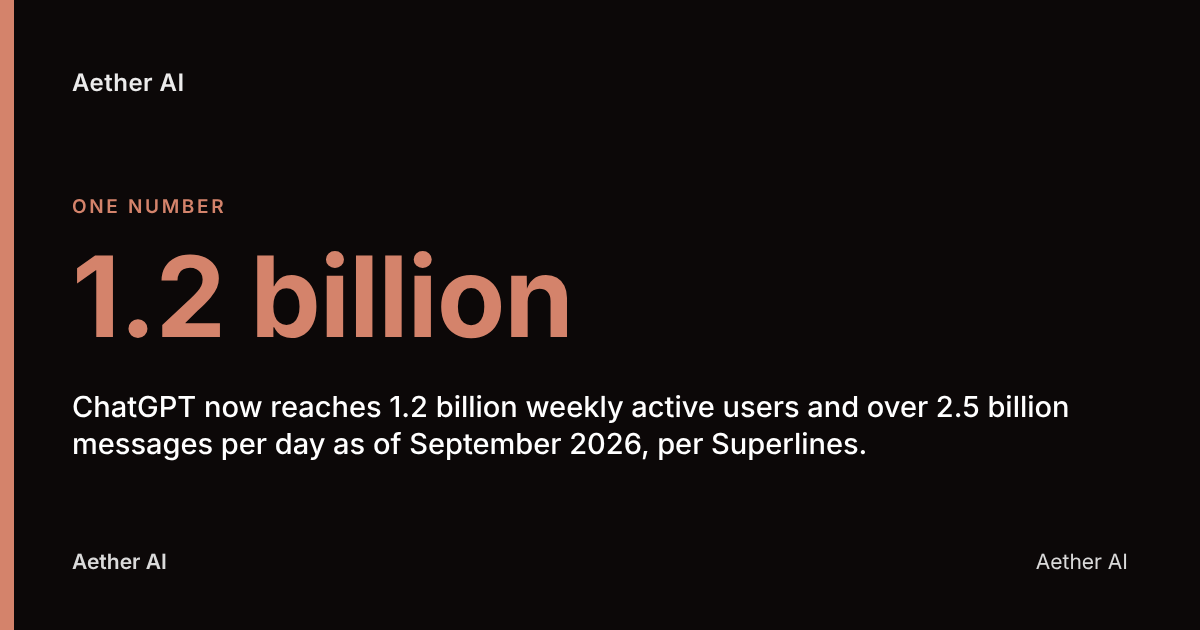
- ChatGPT now reaches 1.2 billion weekly active users and over 2.5 billion messages per day as of September 2026, per Superlines.
How does ChatGPT source information about brands?
ChatGPT is a large language model built by OpenAI that generates answers using two distinct mechanisms: knowledge baked into its training data, and live retrieval from the web when a query needs current information. Understanding which mechanism is active for a given query is the starting point for any diagnosis.
When ChatGPT answers from training data alone, it is recalling patterns learnt during a fixed training period — it cannot "look up" your brand in real time. When it uses retrieval-augmented generation (RAG) — a technique where the model searches the live web and feeds the results back into its answer — it behaves more like a search engine, pulling from indexed pages, structured data, and trusted third-party sources at the moment you ask.
This matters because a brand's absence can stem from two very different problems. If ChatGPT is relying on stale training data, your brand may simply post-date the cut-off. If it's using live retrieval and still missing you, the problem is almost certainly about authority signals — not timing.
ChatGPT weights third-party corroboration heavily over brand-owned claims. A brand that only exists on its own website, with no coverage elsewhere, gives the model nothing independent to verify. This is why about 85% of brand mentions in AI search originate from third-party pages rather than brand-owned sites, according to Indexly, with brands 6.5 times more likely to be cited through external sources than their own.
Does my website need to be indexed by Google or Bing for ChatGPT to know about my brand?
Google indexing is not strictly required for ChatGPT visibility, but it is one of the strongest practical signals available, because ChatGPT's retrieval layer and OpenAI's web crawlers (GPTBot) often draw on the same crawlable web that search engines index. If your site blocks crawlers via robots.txt, or returns errors to bots, you're invisible to both systems simultaneously.
Bing matters more than many UK marketers assume. Microsoft's Bing index has historically fed Copilot and parts of OpenAI's retrieval stack, so a site that's indexed in Bing but ignored in Google can still surface in AI answers — and vice versa.
The practical checklist here is straightforward:
- Confirm
robots.txtdoesn't block GPTBot, OAI-SearchBot, or Bingbot. - Check Google Search Console and Bing Webmaster Tools for crawl errors.
- Verify your key pages return a 200 status and load without JavaScript-only rendering blocking content.
- Consider an
llms.txtfile — an emerging, voluntary standard that gives AI crawlers a structured map of your most important pages, similar in spirit to a sitemap but aimed at language models.
None of this guarantees a citation. But a site that's technically invisible to crawlers has ruled itself out before the authority question is even asked.
Can I check right now whether ChatGPT has any knowledge of my brand?
Yes — testing ChatGPT's current knowledge of your brand takes minutes and requires no special tools, just a structured set of prompts run in a fresh, logged-out-style conversation. Don't rely on a single question; AI answers vary by phrasing, so the test needs range.
Run these prompt types and note what comes back:
- Direct: "The click was always a proxy. What matters is being the name the buyer carries into the conversation. AI referrals are smaller in volume and radically better in intent — the person who arrives from an assistant has already been told you're the answer." or "Tell me about [Brand Name]."
- Category: "What are the best [your category] companies in the UK?"
- Comparison: "How does [Brand Name] compare to [Competitor]?"
- Problem-led: "I need [solution your product provides] — what should I consider?"
A single missing mention from one prompt isn't proof of a problem, as ContextBolt notes — phrasing sensitivity and conversational variance mean you need repeated, varied testing to draw conclusions. Run each prompt three to five times across sessions and log whether your brand appears, where it ranks in the list, and what tone surrounds it (favourable, neutral, or absent entirely).
This is also where manual testing starts to break down at scale. A business with twenty target keywords across four AI engines can't realistically repeat this process weekly by hand — which is why platforms like Aether AI exist to automate citation tracking across ChatGPT, Perplexity, Google AI Overviews, Claude, Gemini, and Copilot, logging frequency and position over time rather than relying on one-off spot checks.
How is visibility in ChatGPT different from ranking in Google search (SEO vs GEO)?
SEO (search engine optimisation) is the practice of ranking web pages in traditional search results like Google, built around keywords, backlinks, and page authority; GEO (generative engine optimisation) is the parallel practice of getting a brand cited, summarised, or recommended inside AI-generated answers, built around entity recognition, third-party corroboration, and structured clarity. The two overlap but are not interchangeable.
| Factor | SEO (Google ranking) | GEO (ChatGPT visibility) |
|---|---|---|
| Core unit | A ranked web page | A cited or recommended brand/entity |
| Primary signal | Backlinks, keywords, page authority | Third-party mentions, entity clarity, structured data |
| Success measure | Position 1-10 in SERPs | Appears/doesn't appear in a generated answer |
| User action | Clicks through to your site | Reads the answer, may never visit your site |
| Update speed | Days to weeks (crawl + index) | Depends on training cut-off or live retrieval |
| Owned content weight | High | Lower — only ~15% of citations trace to owned pages per Indexly |
The data in the EMGI report underscores the gap starkly: 44% of Google's top-ranked SaaS brands have zero citations in ChatGPT for identical category queries, per the EMGI SaaS AI Citation Gap Report 2026, via RankZero. Ranking first on Google tells you almost nothing about whether ChatGPT will ever mention you.
The stakes for getting GEO right are rising. 51% of B2B software buyers now begin research with an AI chatbot more often than with Google, up from 29% in April 2025, and 69% of buyers switched vendors based on AI guidance, according to G2's "The Answer Economy" survey of 1,076 B2B decision-makers.
What on-site factors influence whether AI models pick up my brand?
On-site structure — clear entity definitions, schema markup, and consistent brand descriptions — directly affects whether an AI model can confidently identify what your brand is and does. Schema markup is structured code (using the Schema.org vocabulary) added to a webpage that explicitly tells machines "this is an Organization named X, founded in Y, offering Z" rather than leaving the model to infer it from prose.
Key on-site levers include:
- Organization and Product schema on your homepage and key service pages, declaring name, description, and category unambiguously.
- A clear "About" page stating what you do in plain, factual sentences — not marketing abstraction. "We help businesses thrive" tells a model nothing; "X provides SIA-licensed security guarding across London and the South East" tells it everything.
- Consistent naming — if your brand appears as "Aether AI," "Aether," and "Aether Technologies" across different pages, you fragment the entity signal and make it harder for a model to treat these as one thing.
- FAQ schema and FAQ sections that mirror the actual questions buyers ask, since these map closely to conversational AI query patterns.
- Entity ambiguity is a genuine risk for common or short brand names — if your name overlaps with an existing word, place, or better-known entity, the model may default to the dominant meaning unless your content disambiguates clearly.
Indexly identifies missing structured data and entity ambiguity as two of the most common, fixable causes of ChatGPT invisibility — both are within a marketing team's direct control, unlike third-party coverage.
How important are third-party mentions and reviews in getting my brand recognised?
Third-party mentions are the single strongest lever available, because AI models treat independent corroboration as a trust signal that brand-owned content cannot replicate on its own. RankZero states that fewer than 5-10 credible third-party mentions typically leaves AI without enough signal to cite a brand confidently.
This explains the structural imbalance in how citations actually form: about 85% of brand mentions in AI search come from third-party pages, not the brand's own site, with brands 6.5 times more likely to be cited via external sources, according to Indexly. Review platforms, comparison sites, trade press, and industry directories all count as third-party signal — a Trustpilot profile, a G2 listing, a mention in a trade body's member directory, or coverage in a sector publication all contribute.
For UK businesses, relevant third-party channels include trade bodies (such as the British Security Industry Association for security firms, or techUK for software companies), sector press, and comparison platforms like G2 or Capterra. Understory Agency frames this as "entity confidence" — the model's internal assessment of how well-established and verifiable a brand is based on the pattern of mentions it finds across the open web, not just what the brand says about itself.
The commercial upside of closing this gap is substantial. AI-referred visitors convert at 5.97% versus 0.72% for traditional traffic, reach conversion 62% faster, and generate $18.04 versus $2.56 in revenue per visitor, according to Neil Patel's analysis of 60 campaigns. Separately, Ahrefs found AI search visitors converting at a 23x higher rate than traditional organic visitors on its own site, with AI traffic driving 12.1% of all signups from just 0.5% of sessions.
What practical steps improve my brand's chances of being mentioned by ChatGPT?
Improving AI visibility requires a combined push across technical access, structured content, and third-party authority-building, applied consistently over months rather than as a one-off project. There's no submission form for ChatGPT — no equivalent of "Google Search Console: add my site" — so progress comes from making your brand genuinely easier to find and verify across the web.
Priority actions, roughly in order of effort-to-impact:
- Fix crawler access first — confirm robots.txt and server responses don't block GPTBot or Bingbot; this is a prerequisite, not optional.
- Add Organization, Product, and FAQ schema to your core pages.
- Write a plain-language "what we do" statement on your homepage, free of jargon, stated in the first sentence.
- Pursue listings on relevant directories and review platforms for your sector (G2, Capterra, Trustpilot, trade body directories).
- Earn genuine press and trade coverage — guest contributions, case studies, and partnerships that generate independent third-party pages mentioning your brand by name.
- Publish original data or research — first-party statistics are a strong citation magnet because they give AI models something unique to quote, rather than content competitors have already written.
- Test and track regularly using the prompt method above, logging results monthly rather than once.
Aether AI's own measured baseline illustrates how long this typically takes even for an established brand: across 700 live AI engine scans of four UK brands' target keywords run in July–August 2026, the brands were named in just 23 answers — 3.3% — with the longest-established brand (a security services firm) named in only 6.3% of its 270 scans. This is consistent with the wider pattern the EMGI and RankZero research describes: visibility is earned gradually, not switched on.
Common mistakes UK businesses make with AI visibility
UK businesses most often fail in ChatGPT because they treat AI visibility as a side-effect of SEO rather than a distinct discipline requiring its own content and authority strategy. The most frequent errors include:
- Assuming Google rankings transfer automatically — as the EMGI data shows, 44% of page-one SaaS brands get zero ChatGPT citations.
- Writing only for their own website, ignoring that roughly 85% of citations trace to third-party pages.
- Using inconsistent brand naming across their own site, directories, and press mentions.
- Treating GSC traffic as the whole picture. Many businesses only look at what Google Search Console reports, missing a growing share of referral activity that search consoles don't attribute cleanly to AI engines.
- No one owns the problem — AI visibility falls between marketing, SEO, and PR, and often nobody is explicitly accountable for it.
- Giving up after one test — a brand absent from a single ChatGPT answer isn't necessarily invisible; as ContextBolt notes, conversational variance means repeated testing is essential before concluding there's a real gap.
On ownership specifically: AI visibility sits most naturally with whoever already owns organic search and digital PR, typically a marketing lead or SEO manager, working with a PR agency or in-house comms function to generate the third-party mentions that GEO depends on. Splitting this across silos — SEO team handles schema, PR agency handles press, nobody tracks the combined result — is a near-universal UK failure mode.
Your ChatGPT visibility checklist
- Run the four prompt types (direct, category, comparison, problem-led) across five separate ChatGPT sessions and log results.
- Check robots.txt doesn't block GPTBot, OAI-SearchBot, or Bingbot.
- Confirm your key pages are indexed in both Google Search Console and Bing Webmaster Tools.
- Add Organization, Product, and FAQ schema to your homepage and top service pages.
- Audit brand name consistency across your website, directories, and social profiles.
- Pursue at least 5-10 credible third-party mentions via directories, reviews, or trade press.
- Publish one piece of original data or research your sector doesn't already have.
- Set a monthly cadence to re-test and track citation frequency, position, and sentiment.
FAQ
Why does ChatGPT not mention my brand?
ChatGPT most commonly omits a brand because of insufficient third-party corroboration, missing structured data, or crawler access issues — not because of deliberate exclusion. RankZero notes that fewer than 5-10 credible third-party mentions typically leaves AI without enough signal to cite a brand confidently.
Can a brand rank well in Google and still be invisible in ChatGPT?
Yes, this is common rather than exceptional. The EMGI SaaS AI Citation Gap Report 2026 found that 44% of Google's top-ranked SaaS brands have zero ChatGPT citations for the same category queries, because the two systems weigh entirely different signals.
How do I check if my brand shows up in ChatGPT?
Run a set of direct, category, comparison, and problem-led prompts across multiple fresh ChatGPT sessions and log whether your brand appears, its position, and the tone used. A single absent mention isn't conclusive proof of a problem, per ContextBolt; repeated testing across phrasings is needed.
Can I pay to get my brand included in ChatGPT answers?
No, there is currently no paid submission mechanism to guarantee inclusion in ChatGPT's answers. Visibility is earned through third-party authority, crawlable content, and structured data rather than purchased placement.
What is llms.txt and does my site need one?
An llms.txt file is a voluntary, emerging text file placed on a website that gives AI crawlers a structured map of its most important pages, similar in purpose to a sitemap but aimed specifically at language models. It isn't mandatory, but it's a low-cost addition that removes ambiguity for AI crawlers reading your site.
How many third-party mentions does a brand need to be cited by AI?
Fewer than 5-10 credible third-party mentions typically means an AI model lacks enough signal to confidently cite a brand, according to RankZero. Mentions on review platforms, trade directories, and press coverage all count toward this threshold.
What's the difference between SEO and GEO?
SEO optimises web pages to rank in traditional search engine results pages, while GEO (generative engine optimisation) optimises a brand's presence and authority signals to be cited inside AI-generated answers. The two require overlapping but distinct tactics, since AI citation relies far more heavily on third-party corroboration than Google ranking does.
Diagnosing and fixing AI visibility with Aether AI
Diagnosing why a brand is missing from ChatGPT is exactly the problem Aether AI was built to solve — not as a one-off audit, but as ongoing citation tracking across ChatGPT, Perplexity, Google AI Overviews, Claude, Gemini, and Copilot, paired with keyword, competitor, and Google Search Console data in one place. Instead of manually re-running prompts every month, marketing and SEO leads get a continuous view of whether their brand is appearing, where, and how often.
Aether AI's own measured baseline — 700 live AI engine scans of four UK brands' target keywords across July–August 2026 — found those brands named in just 3.3% of answers overall, with even the most established brand reaching only 6.3%. That data point reflects the same pattern this article describes: AI visibility is earned gradually through structured content and third-party authority, not switched on overnight.
If you want to see where your own brand currently stands, Aether AI offers a free AI-visibility audit at /audit and transparent pricing at /pricing — a practical starting point before committing to a longer-term GEO strategy.