Last updated: 5 November 2026
Multi engine AI tracking is the practice of monitoring how a brand is cited, named or recommended across several AI answer systems — ChatGPT, Perplexity, Google AI Overviews, Claude, Gemini and Microsoft Copilot — rather than just one. It matters because citation rates vary roughly ninefold between engines, according to Barchart (2026), so single-engine monitoring hides most of the picture.
Key Takeaways
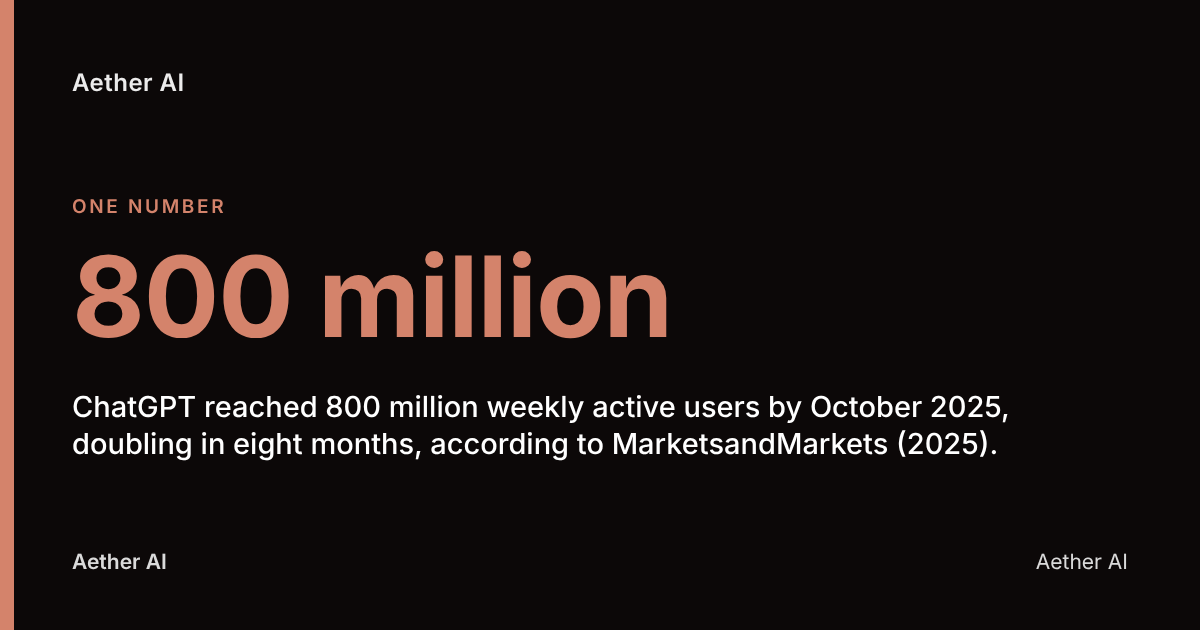
- ChatGPT reached 800 million weekly active users by October 2025, doubling in eight months, according to MarketsandMarkets (2025).
- Microsoft Copilot cited brands at roughly nine times the rate of Google AI Mode in a Q1 2026 sample of commercial prompts tracked by Barchart (2026).
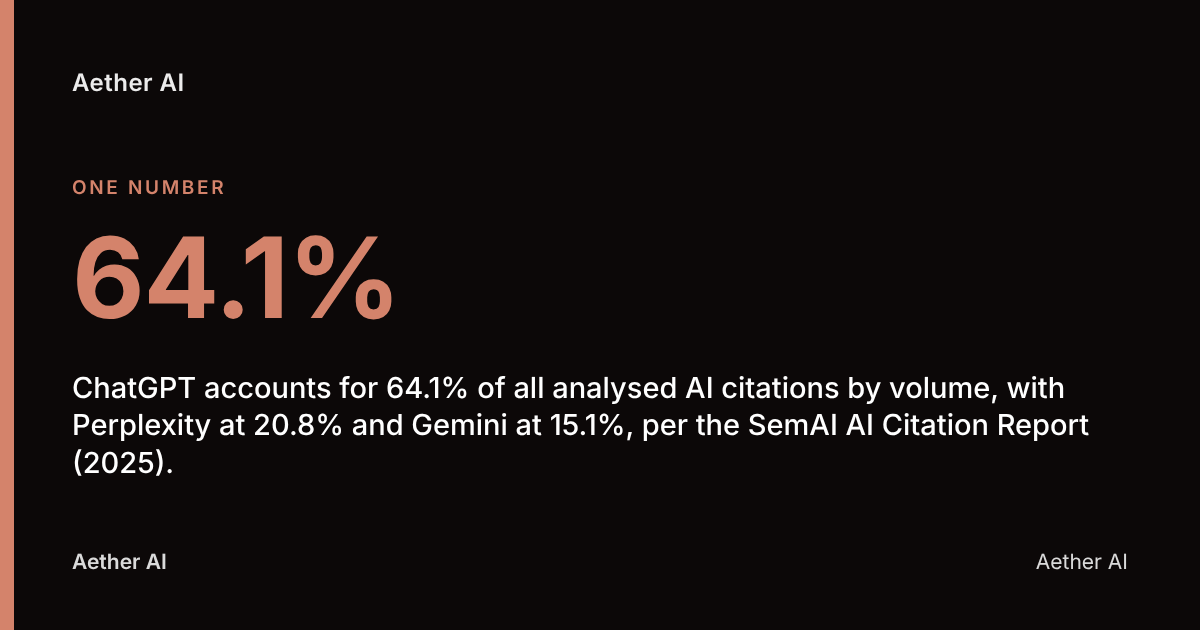
- ChatGPT accounts for 64.1% of all analysed AI citations by volume, with Perplexity at 20.8% and Gemini at 15.1%, per the SemAI AI Citation Report (2025).
- Perplexity averages 7.1 citations per answer, pulling from 5 to 12 sources, versus ChatGPT's 2.8 and Gemini's 4.2, according to Topify AI (2025).
- Across live AI engine scans of UK brands' target keywords in July–August 2026, brands were named in only a small fraction of answers, with the longest-established brand named noticeably more often than the others.
What Is Multi Engine AI Tracking?
Multi engine AI tracking is the discipline of querying several generative AI systems — ChatGPT, Perplexity, Google AI Overviews, Claude, Gemini and Microsoft Copilot — with the same set of buyer-relevant prompts, then logging whether, how and in what context a brand is cited. It replaces the assumption that one engine represents AI search as a whole.
The need for this is structural, not theoretical. ChatGPT alone reached 800 million weekly active users by October 2025, having doubled in just eight months, while Google's AI Overviews now appear in 25–40% of Google searches, according to MarketsandMarkets (2025). Each engine draws from a different index, weights sources differently, and answers the same question in a different way — a brand can dominate one engine's answers and be invisible in another.
This is why Generative Engine Optimization (GEO) — the practice of optimising content so AI systems cite and recommend it, distinct from traditional search engine optimisation — has become its own discipline. The global GEO market is projected to reach USD 1,089.3 million in 2026, growing at a 40.6% CAGR to USD 17,148.6 million by 2034, according to Dimension Market Research (2026). That growth reflects a simple reality: businesses that only check "are we on ChatGPT?" are managing a fraction of their actual AI exposure.
Why Do AI Engines Cite Brands So Differently?
AI engines cite brands at wildly different rates because each uses its own retrieval method, source index and answer format — not a shared ranking system. In a Q1 2026 sample of commercial prompts, Microsoft Copilot cited brands at roughly nine times the rate of Google AI Mode, the lowest-citing engine measured, according to Barchart (2026).
Volume share tells the same story from another angle. ChatGPT accounts for 64.1% of all analysed AI citations, with Perplexity at 20.8% and Gemini at 15.1%, per the SemAI AI Citation Report (2025). But volume share isn't depth: Perplexity averages 7.1 citations per answer, drawing from 5 to 12 sources in a single response, compared with ChatGPT's 2.8 and Gemini's 4.2, according to Topify AI (2025). A brand optimised for ChatGPT's terse citation style may simply not appear in Perplexity's wider source net, and vice versa.
"The pattern that repeats: answers move constantly, sources move slowly. Engines redraft their words week to week, but the underlying set of cited domains is sticky. Winning a citation is hard; once you're in the source set, you tend to stay — which is why starting early compounds." — Lauren Dawkins, Head of Content, Aether AI
That stickiness is precisely why tracking across all six major engines, rather than one, is the only way to see whether a brand is building a durable source position or just a lucky single-engine mention.
How Does Multi Engine AI Tracking Differ From Traditional SEO Rank Tracking?
Multi engine AI tracking differs from traditional SEO rank tracking because it measures citation and recommendation inside a generated answer, not a position on a results page. Traditional rank tracking — monitoring where a URL sits for a keyword in Google — assumes a stable, ordered list of ten blue links. AI answers have no fixed list; the same prompt run twice can surface different sources.
| Dimension | Traditional SEO rank tracking | Multi engine AI tracking |
|---|---|---|
| What's measured | Position 1–10 for a keyword on one search engine | Whether/how a brand is cited across 6 AI engines |
| Output format | Ranked list of URLs | Generated prose answer with embedded citations |
| Stability | Relatively stable day to day | Can vary run to run on identical prompts |
| Conversion signal | Click-through rate | Referral conversion — ChatGPT referrals convert at 15.9% vs 1.76% for Google organic, a roughly 9x gap, per Seer Interactive (2025) |
| Competitive insight | Who outranks you | Who gets cited instead of you, and why |
| Tooling | Rank trackers (SEMrush, Ahrefs position tracking) | AI citation platforms (Aether AI, Profound, Otterly.ai) |
The conversion gap matters commercially. Ahrefs found AI search visitors generated 12.1% of its new signups despite accounting for only 0.5% of total visitors — a roughly 23-24x conversion ratio versus organic traffic, according to Ahrefs via MarketsandMarkets (2025). AI-referred traffic to US retail sites also grew substantially year-over-year during the 2025 holiday season, converting notably better than non-AI traffic with revenue per visit climbing sharply. A business tracking only Google rank position never sees this channel forming.
What Metrics Should a Business Monitor Across Multiple AI Engines?
A business monitoring multi engine AI tracking should prioritise citation rate, share of voice against named competitors, and sentiment — not just whether the brand appears, but how it's described. Citation rate is the simplest starting metric: the percentage of relevant prompts in which a brand is named at all.
Core metrics to track per engine:
- Citation rate — the proportion of target prompts where the brand appears, tracked separately for ChatGPT, Perplexity, Gemini, Claude, Copilot and Google AI Overviews.
- Share of voice — how often the brand is named relative to named competitors on the same prompt set.
- Source attribution — which specific pages or domains the engine actually pulled the citation from, so content gaps can be fixed at source.
- Sentiment and framing — whether the brand is recommended, merely mentioned, or described unfavourably alongside competitors.
- Query coverage — the breadth of commercial, informational and comparison prompts tracked, since a brand can be strong on one intent and absent on another.
- Trend over time — citation rate tracked weekly or monthly, since answers redraft constantly even when the underlying source set is stable.
Citation rate needs tracking continuously rather than as a one-off check: across live AI engine scans of UK brands' target keywords between July and August 2026, the brands were named in only a small minority of answers overall, while the longest-established brand, a security services business, was named noticeably more often across its own scans. That gap between brands in the same measurement window shows citation rate is neither uniform nor guaranteed, even for an established operator.
How Much Does Multi Engine AI Tracking Software Cost in the UK?
Multi engine AI tracking software in the UK is typically sold as a monthly subscription, scaled by the number of tracked keywords, prompts and engines rather than by seat. Rather than quote invented figures, the realistic approach for a buyer is to compare what's included at each tier — engine coverage, prompt volume, and whether Google Search Console data is integrated — before comparing price.
Businesses evaluating cost should check:
| Factor | What to look for |
|---|---|
| Engine coverage | Does it track all six major engines (ChatGPT, Perplexity, Google AI Overviews, Claude, Gemini, Copilot) or only two or three? |
| Prompt/keyword limits | Is the plan capped by number of tracked keywords, or by number of prompt runs per month? |
| GSC integration | Can it cross-reference Google Search Console clicks against AI citation data? |
| Content generation | Does the platform only report, or does it also help produce AI-optimised content to close gaps? |
| Free trial / audit | Is there a free audit to establish a baseline before committing to a paid tier? |
Aether AI publishes its pricing openly rather than requiring a sales call, and offers a free AI-visibility audit at /audit so a business can see its current citation baseline before paying for anything.
Who Within a UK Company Should Own AI Engine Tracking?
Ownership of multi engine AI tracking in a UK company typically sits with the marketing or SEO team initially, but increasingly moves to a dedicated function as the data feeds content strategy, PR and product positioning decisions. In smaller firms, a single marketing lead or founder often runs it alongside existing SEO duties.
In larger organisations, responsibility tends to split three ways: the SEO or content team manages the day-to-day monitoring and content fixes; a data or analytics function validates the metrics against Google Search Console and CRM data; and a senior marketing stakeholder uses the trend data to justify budget. The useful discipline, regardless of team size, is treating AI citation tracking as a recurring operational task — not a one-off audit — because, as noted above, the underlying source set shifts slowly even while individual answers redraft week to week.
What Mistakes Do Businesses Make Interpreting AI Tracking Data?
The most common mistake in interpreting multi engine AI tracking data is treating a single prompt run as representative, when AI answers are stochastic and can vary between identical queries run minutes apart. A brand cited once in a spot-check is not necessarily "winning" that engine; a brand absent from one run is not necessarily losing it.
Other recurring errors:
- Ignoring engine-specific weighting. Treating ChatGPT citation rate and Perplexity citation rate as directly comparable, when Perplexity cites 5 to 12 sources per answer and ChatGPT cites far fewer, per Topify AI (2025) — a low ChatGPT citation count isn't automatically a failure.
- Confusing mention with recommendation. A brand named in passing, as one of several options, is a different (and weaker) outcome than being the sole recommended answer.
- Measuring too few prompts. A handful of branded prompts tells a business almost nothing about how it performs on the unbranded, buyer-intent queries that actually drive new customers.
- Skipping source attribution. Knowing a brand was cited is less useful than knowing which page the engine pulled the citation from — without that, there's nothing concrete to fix.
- No repeatable cadence. Running an AI visibility check once a quarter misses the week-to-week redrafting that genuinely signals whether content changes are working.
Are There UK GDPR or Compliance Considerations for AI Tracking Tools?
UK businesses using multi engine AI tracking tools should check how the vendor handles data under the UK General Data Protection Regulation (UK GDPR) and the Data Protection Act 2018, particularly where the tool processes customer queries or integrates with Google Search Console data containing user-level information. Most AI citation tracking is based on brand and keyword prompts rather than personal data, which limits exposure, but integrations matter.
Specific points worth checking with any vendor, UK-based or otherwise:
- Where the tool's servers and any sub-processors are located, and whether data transfers outside the UK/EEA are covered by appropriate safeguards.
- Whether GSC integration pulls any personally identifiable query data, and how that's retained.
- The vendor's data retention and deletion policy for historic citation logs.
- Whether the vendor is registered with the Information Commissioner's Office (ICO) as a data controller or processor, where applicable.
None of this is unique to AI tracking — it's the same due diligence a business would apply to any SaaS tool handling business or customer-adjacent data — but it's worth confirming explicitly before rollout, not after.
Your multi engine AI tracking checklist
- Map your six target engines: ChatGPT, Perplexity, Google AI Overviews, Claude, Gemini and Microsoft Copilot.
- Build a prompt set that covers branded, unbranded and competitor-comparison queries, not just your own brand name.
- Run a baseline audit before making any content changes, so you can measure movement afterwards.
- Track citation rate, share of voice and source attribution separately for each engine.
- Check source-page attribution weekly to find out which content is actually being pulled, not just that you were mentioned.
- Confirm the vendor's UK GDPR position and GSC integration scope before rollout.
- Review trend data monthly rather than reacting to any single prompt run.
- Feed citation gaps back into content production so new pages target the prompts where you're currently absent.
FAQ
What does multi engine AI tracking mean in practice?
Multi engine AI tracking means running the same set of prompts across several AI systems — ChatGPT, Perplexity, Google AI Overviews, Claude, Gemini and Copilot — to see where and how a brand gets cited. It replaces single-engine guesswork with a comparable, repeatable measurement across the whole AI search landscape.
Which AI engines actually matter for a UK business to track?
The six engines worth tracking are ChatGPT, Perplexity, Google AI Overviews, Claude, Gemini and Microsoft Copilot, since each draws on a different source index and citation style. ChatGPT alone reached 800 million weekly active users by October 2025, according to MarketsandMarkets (2025), but ignoring the other five still misses most of a brand's AI exposure.
How is multi engine AI tracking different from checking my Google ranking?
Google ranking tracking measures a URL's position in a list of ten results; multi engine AI tracking measures whether a brand is cited or recommended inside a generated prose answer, which has no fixed position and can change between identical runs. The two are complementary, not interchangeable, measurements.
How long does it take to see useful data from an AI tracking tool?
A baseline citation rate can usually be established within the first set of scans, often within days of setup, though meaningful trend data — showing whether content changes are improving citation rate — typically needs several weeks of repeated runs, since AI answers redraft constantly and single snapshots are unreliable.
Can multi engine AI tracking show which competitors are cited instead of my brand?
Yes — tracking the same prompt set against named competitors reveals share of voice, showing exactly which prompts return a competitor's name instead of yours and which source pages the engine pulled that competitor citation from.
Does AI referral traffic actually convert better than organic search traffic?
Yes, by a wide margin in the data available. ChatGPT referrals convert at 15.9% compared with 1.76% for Google organic search, roughly a 9x gap, according to Seer Interactive (2025), and Ahrefs recorded AI visitors generating 12.1% of new signups from just 0.5% of total traffic, a 23-24x conversion ratio, per MarketsandMarkets (2025).
What should I check before choosing a multi engine AI tracking vendor?
Check that the tool queries engines the way real buyers phrase questions, that it exposes the actual source pages behind every answer rather than just a citation count, and that it can help act on gaps rather than only report them. Dashboards that only observe are grief counselling with a subscription."
Tracking your brand's visibility with Aether AI
Everything above — the engine-to-engine citation gaps, the need for repeatable prompt runs, the risk of reading a single scan as representative — is the exact problem Aether AI was built to solve. The platform tracks citation across all six major AI engines (ChatGPT, Perplexity, Google AI Overviews, Claude, Gemini and Microsoft Copilot) alongside keyword and competitor tracking and direct Google Search Console integration, so a business sees AI visibility and traditional search performance side by side rather than guessing how they connect.
Across live AI engine scans of UK brands' target keywords in July–August 2026, the brands were named in only a small fraction of answers overall. Aether AI is built and operated by Aether Agency Ltd. Priority First, Pulse Operations and Aether Agency are businesses connected to the founding team, and that baseline was measured on the founding team's own properties, which is exactly how the platform proves its own tracking works before recommending it to anyone else.
If you want to see where your brand currently stands, start with the free AI-visibility audit at aether-ai.co.uk/audit, or review public pricing to find the tier that matches your prompt volume and engine coverage needs.