Last updated: 8 November 2026
Prompt volumes are modelled estimates of how often people type a given question or phrase into AI answer engines such as ChatGPT, Gemini, Claude and Perplexity, used by GEO (generative engine optimisation) tools to rank which topics are worth targeting. Unlike Google's search volume, no AI vendor publishes raw query data, so every prompt volume figure is an estimate built from panels, not a verified count.
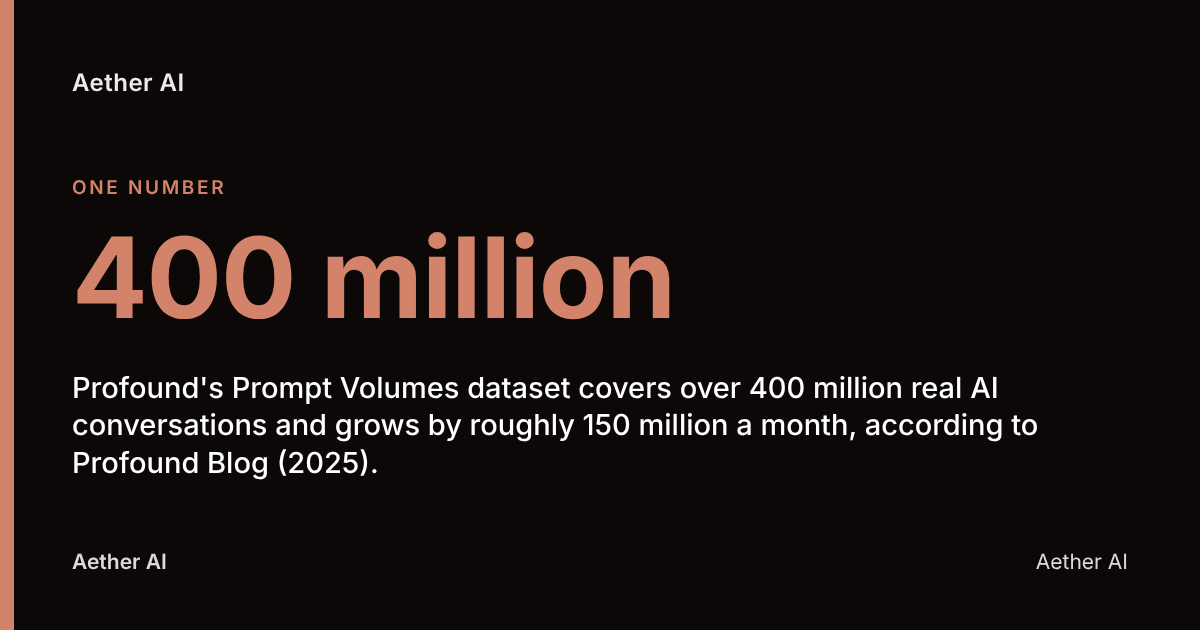
The metric exists because none of the major AI engines expose query logs the way Google Search Console or Google Ads does, leaving vendors to model demand from indirect signals. Profound's Prompt Volumes dataset, for example, is built on hundreds of millions of real conversations between users and AI answer engines, sourced via a double opt-in consumer panel (Profound Help Center, 2026). A separate Profound blog post puts the dataset at over 400 million real AI conversations, growing by roughly 150 million every month (2025). Other vendors, such as Peec AI, build their estimates from clickstream panel data covering over 50 million global users combined with Google search volume data (2026) — a different methodology producing a different number for the same prompt.
Key Takeaways
- Aether AI advises that prompt volume is a modelled, not measured, estimate of how often a phrase is used as a prompt in AI chat engines.
- Profound's Prompt Volumes dataset covers over 400 million real AI conversations and grows by roughly 150 million a month, according to Profound Blog (2025).
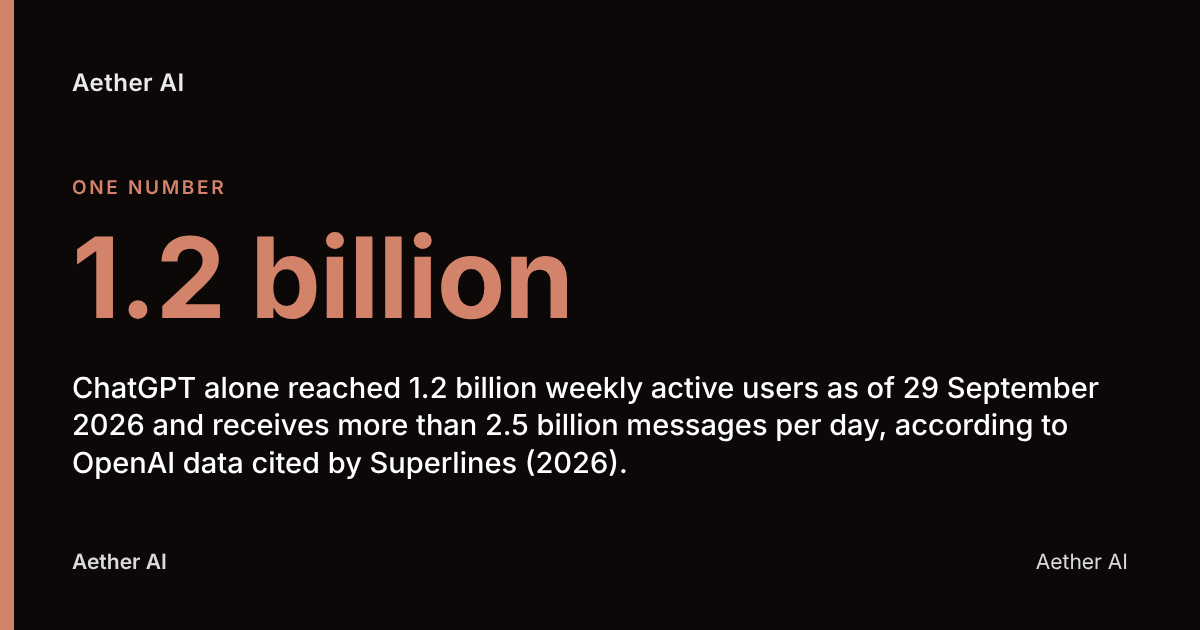
- ChatGPT alone reached 1.2 billion weekly active users as of 29 September 2026 and receives more than 2.5 billion messages per day, according to OpenAI data cited by Superlines (2026).
- Vendor figures vary widely — some materials reference up to 1.9 billion prompts, per The Shrug Report (2026) — so prompt volume numbers should be compared within one tool, not across tools.
What prompt volumes mean in practice
For a business professional building a GEO strategy, prompt volume works less like a precise forecast and more like a priority filter. A high prompt volume score suggests a topic or question is commonly asked of AI engines, helping teams decide which content to produce or optimise first. It should not be treated as a literal count of searches, because the underlying panels only sample a fraction of global AI conversations and different vendors model that sample differently. Aether AI treats prompt volume as one directional signal among several — alongside citation tracking across six AI engines and keyword data from Google Search Console — rather than the sole basis for a content decision.
Related terms
- GEO (generative engine optimisation): the practice of optimising content so AI answer engines cite or recommend it.
- Prompt Opportunity: a GEO metric combining prompt volume with a brand's current visibility gap for that prompt.
- Citation tracking: monitoring whether and how often a brand is named or linked in AI-generated answers.
- Query fan-out: the process by which an AI engine breaks one user prompt into multiple sub-queries before generating an answer.
- Search volume: Google's measured count of how often a keyword is typed into its search box, distinct from any modelled AI prompt estimate.