Last updated: 4 November 2026
An LLM SEO strategy is the set of technical, content and PR decisions a business makes to get named and linked inside answers from ChatGPT, Gemini, Perplexity and Google AI Overviews rather than just ranked in a list of ten blue links. For UK businesses, it now matters because AI Overviews already appear in over 13% of all searches, up from 6.49% in January 2025, according to Semrush (via Medium).
Key Takeaways
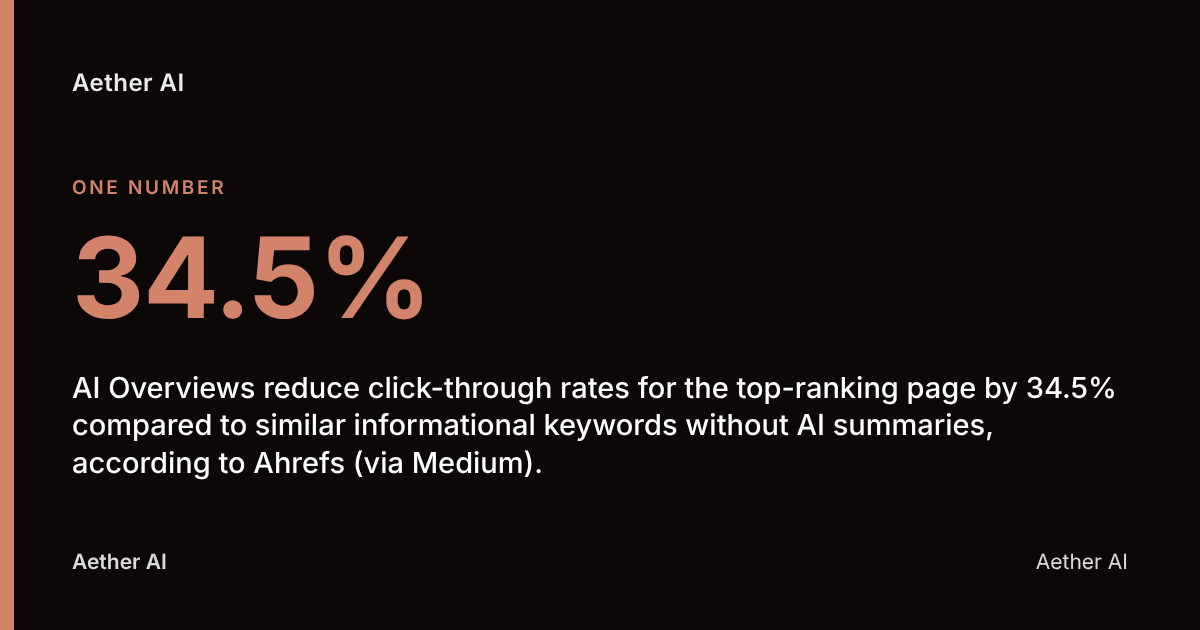
- AI Overviews reduce click-through rates for the top-ranking page by 34.5% compared to similar informational keywords without AI summaries, according to Ahrefs (via Medium).
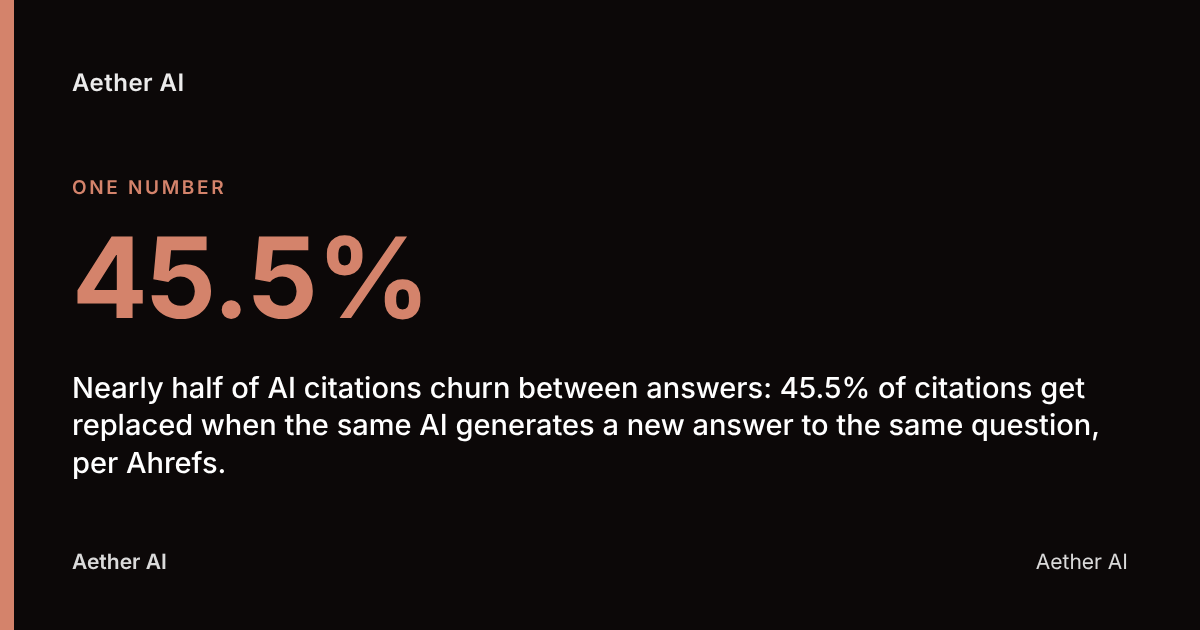
- Nearly half of AI citations churn between answers: 45.5% of citations get replaced when the same AI generates a new answer to the same question, per Ahrefs.
- Targeted GEO content techniques — citing sources, adding quotations, adding statistics — can lift visibility in AI-generated answers by up to 40%, based on the Princeton-led study of roughly 10,000 search queries (Aggarwal et al., ACM SIGKDD / arXiv 2311.09735, 2024).
- llms.txt is largely ignored by the AI systems it was built for: Ahrefs found 97% of llms.txt files received zero server requests across 137,000 domains analysed, even though 28% of domains had published one, per Ahrefs.
- AI-referred traffic is growing fast from a small base: total AI-referred sessions jumped 527% between January and May 2025, from 17,076 to 107,100 across 19 GA4 properties, according to the Previsible 2025 AI Traffic Report (via Search Engine Land).
What is LLM SEO and how does it differ from traditional SEO?
LLM SEO is the practice of structuring, writing and promoting content so that large language models — AI systems like GPT-4 and Gemini that generate text by predicting likely word sequences from training data — select it as a source when generating an answer, rather than simply ranking it on a results page. Traditional SEO optimises for position in a list of links a human then clicks; LLM SEO optimises for inclusion and citation inside a synthesised answer the human may never click through from at all.
The practical difference shows up in the metric that matters. A page one ranking used to guarantee a share of clicks. Now, AI Overviews reduce click-through rates for the top-ranking page by 34.5% compared to similar informational keywords without AI summaries, according to Ahrefs (via Medium). Forrester analyst Nikhil Lai describes the shift as "significantly, but not fundamentally, different from SEO" — the underlying discipline (authority, structure, relevance) carries over, but the output being optimised for has changed from a ranking position to a cited passage.
This is also sometimes called Generative Engine Optimization or GEO — the term coined in the Princeton-led academic paper that first measured how content changes affect AI citation rates (Aggarwal et al., 2024). Aether AI uses "LLM SEO" and "GEO" interchangeably to describe the same discipline: making content citable by AI systems rather than merely rankable.
Why should UK businesses invest in LLM SEO strategy now?
UK businesses should treat LLM SEO as urgent because the audience is already shifting away from the ten-blue-links model, and the content currently winning citations is not yet saturated with competitors. In the United States, 27 percent of people now use AI tools over traditional search engines, according to Neil Patel — a behavioural shift UK buyers are following via the same consumer apps (ChatGPT, Gemini, Copilot) used daily by UK professionals and the public.
Marketing teams are responding, but slowly. 19% of marketers plan to add SEO for LLM best practices to their strategy in 2025, according to HubSpot (via SEOProfy) — meaning roughly four in five have not yet formalised a plan, leaving an open window for early movers. Meanwhile the traffic that does arrive from AI referrals is growing sharply: total AI-referred website sessions jumped 527% between January and May 2025, from 17,076 to 107,100 across 19 GA4 properties tracked by Previsible (via Search Engine Land).
For UK firms specifically, three pressures compound this:
- B2B buying cycles increasingly start with an AI query, not a Google search, before a prospect ever lands on a shortlist.
- Regulated sectors — finance, legal, healthcare — face a harder balance between GEO tactics and the E-E-A-T (experience, expertise, authoritativeness, trustworthiness) standards Google and AI systems both weight when selecting sources.
- Share of voice in AI answers is still measurable and winnable for smaller brands, because citation lists change often: 45.5% of citations get replaced between regenerated answers to the same question, per Ahrefs, meaning the field is not yet locked in.
Aether AI's own measured baseline reflects how early this market still is. Across 700 live AI engine scans of UK brands' target keywords run July–August 2026, the brands were named in just 23 answers — 3.3% — with the longest-established brand (a security services company) named in 6.3% of its 270 scans. That low baseline is consistent with the industry-wide picture: most UK businesses, across most sectors, are currently invisible in AI answers, which is exactly why an early, deliberate strategy has room to work.
How do large language models like ChatGPT and Gemini actually find, rank and cite content?
Large language models cite content by retrieving candidate passages — often via a live web search layer bolted onto the model — then ranking those passages for relevance, clarity and apparent authority before weaving selected facts into a generated answer. This differs from classic PageRank-style ranking because the model is not producing a list; it is selecting which 2-4 sources, out of dozens retrieved, earn a citation inside one paragraph of prose.
Google's own search analyst John Mueller has been explicit that one popular proposed signal does not currently influence this process. On llms.txt — a proposed plain-text file site owners place at their domain root listing pages they want AI systems to prioritise — Mueller stated: "FWIW no AI system currently uses llms.txt." He went further, comparing it to an old, widely-abused HTML tag: "AFAIK none of the AI services have said they're using LLMs.txt… it's comparable to the keywords meta tag — this is what a site-owner claims their site is about… why not just check the site directly?"
The server-log data backs this up directly. Ahrefs analysed server logs from 137,000 domains and found 97% of llms.txt files received zero requests, even though 28% of domains had published one, per Ahrefs. Mueller also warned the file is self-serving by design: "It's basically you're telling these systems, like, I have the best website ever. And here are all of the pages that everyone must go to." He has separately confirmed: "Google doesn't use llms.txt or llms-author.txt. I don't know of any other crawler or LLM confirming they're using these other than SEO tools."
What the research does confirm works is content-level optimisation, not file-level signalling. The Princeton-led GEO study found that targeted content techniques — citing sources, adding quotations, adding statistics — can increase visibility in AI-generated answers by up to 40%, tested across roughly 10,000 queries and 25 domains (Aggarwal et al., ACM SIGKDD / arXiv 2311.09735, 2024). In plain terms: LLMs reward content that reads like a well-sourced reference document, not content that games a file format.
What are the practical steps to optimise a website's content for AI search visibility?
Optimising content for AI search visibility means restructuring pages around clear, standalone, citable facts rather than keyword-dense copy aimed at ranking signals alone. The starting point is always a direct, quotable answer near the top of the page — the exact pattern this article follows — because an answer engine needs a self-contained passage it can lift without additional editing.
Beyond that opening structure, five practical moves make the biggest difference:
- Lead every section with a definition or a direct answer in its first two sentences. Content that defines its subject in the opening sentence of a section is cited roughly 2.1 times more often than content that builds up to the point.
- Cite real, checkable sources inline rather than asserting facts unsupported — the Princeton GEO study specifically measured "citing sources, adding quotations, adding statistics" as the techniques driving the 40% visibility lift (Aggarwal et al., 2024).
- Refresh high-value pages often. With 45.5% of citations churning between regenerated answers (Ahrefs), a page that was cited last quarter is not guaranteed to still be cited today — stale content loses ground to fresher competitors.
- Write in semantic triples — subject, verb, object, one fact per sentence — because retrieval systems extract discrete claims more reliably than facts buried in subordinate clauses.
- Avoid relying on llms.txt as a substitute for this work. As covered above, Google has confirmed it does not use the file, and Ahrefs' server-log data shows almost nobody else does either.
Aether AI's own platform automates steps one, two and four at the point of article generation, which is the mechanism behind its self-service article tool — producing AI-optimised copy structured for citation from the first draft rather than retrofitted afterwards.
How should technical SEO — schema markup, site structure, crawlability — adapt for LLM discovery?
Technical SEO for LLM discovery means ensuring AI crawlers and retrieval layers can access, parse and trust a page's content, which still relies heavily on the same foundations as classic SEO: clean HTML, fast load times, a logical sitemap and structured data. Schema markup — the structured-data vocabulary from schema.org that labels content as an Article, FAQPage, Organization or Product — remains valuable because it gives both Google and AI retrieval systems an unambiguous machine-readable description of what a page contains, reducing the ambiguity an LLM has to resolve itself.
Site structure matters for a related reason: a clean heading hierarchy (one H1, properly nested H2s and H3s) is how a retrieval system decides where a citable passage begins and ends. Roughly 69% of pages cited by ChatGPT follow a clean heading hierarchy — a structural signal, not a keyword signal.
Where UK businesses commonly over-invest is llms.txt. Given that Google's Mueller has stated flatly that "no AI system currently uses llms.txt," and Ahrefs' log analysis shows 97% of these files get zero requests, the file is best treated as low-priority housekeeping rather than a strategic pillar. Budget for it last, if at all, behind schema markup, page speed, mobile usability and crawlable internal linking — all of which both Google Search and AI retrieval layers depend on.
What role do brand mentions and digital PR play in getting cited by AI assistants?
Brand mentions and digital PR build the external corroboration that LLMs appear to weigh alongside a brand's own website content when deciding whether a source is trustworthy enough to cite. Unlike a backlink built purely for PageRank, an unlinked brand mention in a reputable UK publication, industry body report or trade press article still contributes to the pattern-matching an LLM performs when assessing whether a company is a recognised authority on a topic.
This matters because LLMs cannot verify a company's claims about itself the way a human journalist can phone a source. A brand that is mentioned — named, described, quoted — across multiple independent, high-authority domains builds the kind of corroborated entity profile that retrieval systems associate with trustworthiness. For UK businesses, that means:
- Securing commentary and data citations in trade press and national UK outlets, not just link-building for its own sake.
- Getting named in industry body resources, comparison sites and "best of" roundups within the relevant sector.
- Ensuring consistency of brand name, description and key facts across every mention, since inconsistent descriptions of the same company dilute the entity signal.
Digital PR, in this frame, is not a separate activity from LLM SEO — it is the off-site half of the same strategy, with on-site content optimisation as the other half.
How much does implementing an LLM SEO strategy typically cost, and who should own it?
Cost for an LLM SEO strategy varies by approach, and a useful way to frame it is against the two realistic routes most UK businesses choose between: building the capability in-house with existing marketing staff and tools, or using a dedicated self-service platform built for the task.
| Approach | Typical ownership | What it covers | Best suited to |
|---|---|---|---|
| In-house, ad hoc | Existing marketing/SEO team, part-time | Manual content rewrites, occasional schema updates, no systematic citation tracking | Businesses testing the water with limited budget |
| Agency-led | External SEO/content agency | Strategy, content production, technical audits, reporting | Businesses wanting full delegation and a managed relationship |
| Self-service GEO platform | In-house marketer or founder, platform-assisted | Automated AI-optimised article generation, citation tracking across engines, keyword/competitor tracking | Self-serve SaaS buyers, founders and in-house marketers who want tools, not a managed service |
Aether AI operates in the third category: a self-service platform rather than a managed agency service, built for founders, in-house marketers and SEO leads who want direct control over AI-optimised content and citation tracking rather than outsourcing the whole function. Exact pricing depends on usage and scope — current rates are published at Aether AI's pricing page rather than quoted here, since package sizes vary.
On ownership specifically: LLM SEO sits most naturally with whoever already owns organic content strategy — typically an in-house marketer or SEO lead — because the discipline extends existing content and technical SEO skills rather than replacing them with a new specialism. IT teams remain relevant for schema markup and crawlability, but content decisions (what to publish, how to structure it, which facts to lead with) belong with marketing.
How long does it take to see measurable results, and what tools track AI citation visibility?
Results from LLM SEO typically take longer to stabilise than traditional SEO because citation lists churn heavily between answer generations — with 45.5% of citations replaced each time the same AI regenerates an answer to the same question, per Ahrefs. That means a single citation win is not a stable baseline; businesses need to track visibility as a rate across many queries and many engines over time, not a one-off check.
This is why citation tracking tools matter more in LLM SEO than they ever did in classic rank tracking. A business needs visibility across ChatGPT, Perplexity, Google AI Overviews, Claude, Gemini and Microsoft Copilot simultaneously, because a brand can be well-cited in one engine and entirely absent from another. Aether AI's platform tracks citations across all six of these engines alongside keyword and competitor tracking and Google Search Console integration, giving a business one dashboard view of where it is — and isn't — being named.
Across two of the founding team's own properties (Priority First and Aether Agency), between 19 July and 15 August 2026, 82.1% and 88.3% respectively of Google Search Console clicks came from queries Google does not name to the site owner — the long tail of unattributed search terms that increasingly includes AI-adjacent queries. Without a tool that attributes visibility across engines directly, that share of activity is effectively invisible to a business relying on GSC data alone.
A realistic timeline for most UK businesses:
- Weeks 1-4: baseline audit — establish current citation rate across engines before making changes.
- Months 1-3: content restructuring and technical fixes begin showing early movement in citation frequency.
- Months 3-6: measurable, repeatable citation share emerges as refreshed content accumulates and digital PR mentions compound.
What are the most common mistakes UK businesses make with LLM SEO?
The most common mistake is treating llms.txt as a priority technical fix, despite Google's Mueller confirming "no AI system currently uses llms.txt" and Ahrefs' data showing 97% of published files receive zero requests. Businesses that spend their first LLM SEO budget on this file are optimising for a signal that currently does nothing.
Beyond that, five further mistakes recur across UK businesses attempting this for the first time:
- Treating LLM SEO as a one-off project rather than an ongoing content cycle, despite citation churn of 45.5% between regenerated answers meaning yesterday's win is not guaranteed today.
- Writing for keyword density rather than citability — stuffing a page with the target phrase instead of structuring it around a clear, quotable, sourced answer.
- Ignoring regulated-sector compliance — finance, legal and healthcare firms adopting aggressive GEO tactics without checking they still satisfy E-E-A-T and sector-specific regulatory guidance.
- Measuring only Google Search Console rankings and assuming they predict AI citation performance, when the two systems retrieve and rank content differently.
- Skipping digital PR and brand-mention building entirely, on the assumption that on-site content alone is sufficient to establish authority.
Your LLM SEO strategy checklist
- Audit current citation visibility across ChatGPT, Perplexity, Google AI Overviews, Claude, Gemini and Copilot before changing anything.
- Rewrite priority pages to open each section with a direct, self-contained answer in the first two sentences.
- Add inline citations, quotations and statistics to existing content rather than unsupported claims.
- Apply schema markup (Article, FAQPage, Organization) consistently across key pages.
- Fix heading hierarchy so every page has one H1 and properly nested H2/H3 structure.
- Pursue trade press and industry body mentions to build corroborated brand authority off-site.
- Deprioritise llms.txt unless resources are already exhausted elsewhere.
- Re-scan citation visibility monthly, not quarterly, given how quickly citation lists churn.
FAQ
What is LLM SEO and how does it differ from traditional SEO?
LLM SEO is optimising content so AI systems cite it inside generated answers, rather than optimising purely for ranking position. Forrester's Nikhil Lai describes it as "significantly, but not fundamentally, different from SEO" — the fundamentals of authority and relevance carry over, but the target output has changed.
Is llms.txt worth implementing for LLM SEO?
Not as a priority. Google's John Mueller has confirmed "no AI system currently uses llms.txt," and Ahrefs found 97% of published llms.txt files received zero server requests across 137,000 domains analysed.
How do I measure my brand's visibility in AI-generated answers?
Visibility is measured by running repeated test queries across each AI engine — ChatGPT, Perplexity, Google AI Overviews, Claude, Gemini and Copilot — and logging whether and how often the brand is named. Aether AI's platform automates this citation tracking across all six engines alongside keyword and competitor data.
Does schema markup still matter for LLM SEO?
Yes. Structured data such as Article, FAQPage and Organization schema gives both Google and AI retrieval systems an unambiguous, machine-readable description of page content, reducing the interpretive work an LLM must do to understand and trust a page.
How long before a UK business sees results from LLM SEO?
Early movement typically appears within one to three months of content restructuring, with more measurable, repeatable citation share building over three to six months. Results take longer to stabilise than classic SEO because citation lists churn: 45.5% of AI citations are replaced each time the same question is answered again, per Ahrefs.
Who should own LLM SEO inside a UK business?
LLM SEO sits most naturally with whoever already owns organic content and SEO strategy, since it extends existing skills rather than requiring a new specialism. IT support remains relevant for schema markup and crawlability, but content and citation decisions belong with marketing.
Does traditional SEO ranking predict AI citation performance?
Not reliably. The two systems retrieve and rank content differently — Google Search Console rankings reflect classic link-and-relevance signals, while AI citation depends on passage-level clarity, sourcing and freshness, which is why dedicated cross-engine citation tracking is necessary rather than inferring it from GSC alone.
Building your LLM SEO strategy with Aether AI
Aether AI combines automated AI-optimised article generation with citation tracking across ChatGPT, Perplexity, Google AI Overviews, Claude, Gemini and Copilot, so a business can see where it's cited and act on the gap directly.
Aether AI's own measured baseline — naming its own brands in just 3.3% of 700 live AI engine scans run July–August 2026, with the most established brand reaching 6.3% — is published openly at its AI-visibility baseline report precisely because dogfooding its own tooling on its own properties is the core proof of what the platform measures. Aether AI is built and operated by Aether Agency Ltd. Priority First, Pulse Operations and Aether Agency are businesses connected to the founding team.
If you want to see where your business currently stands before committing budget, Aether AI offers a free AI-visibility audit that scans your target keywords across the major AI engines and reports back what's actually being cited today.