Last updated: 26 November 2026
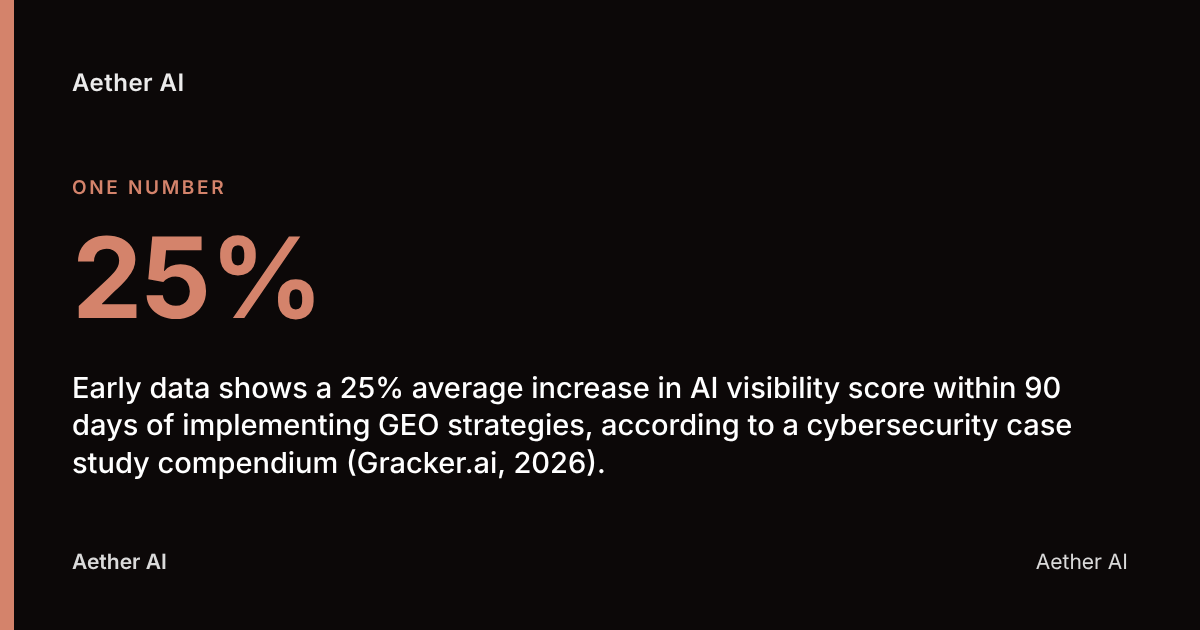
Questions about GEO ROI come down to one thing: can you prove it pays back? GEO (generative engine optimisation) ROI is measured by tracking how often your brand is named in AI answers, then linking that to traffic, leads and sales. Early data shows a 25% average increase in AI visibility score within 90 days of implementing GEO strategies, according to a cybersecurity case study compendium (Gracker.ai, 2026). Results depend on a consistent measurement baseline.
Key Takeaways
- GEO ROI needs a time series of brand mentions in AI answers, because citation rates move week to week.
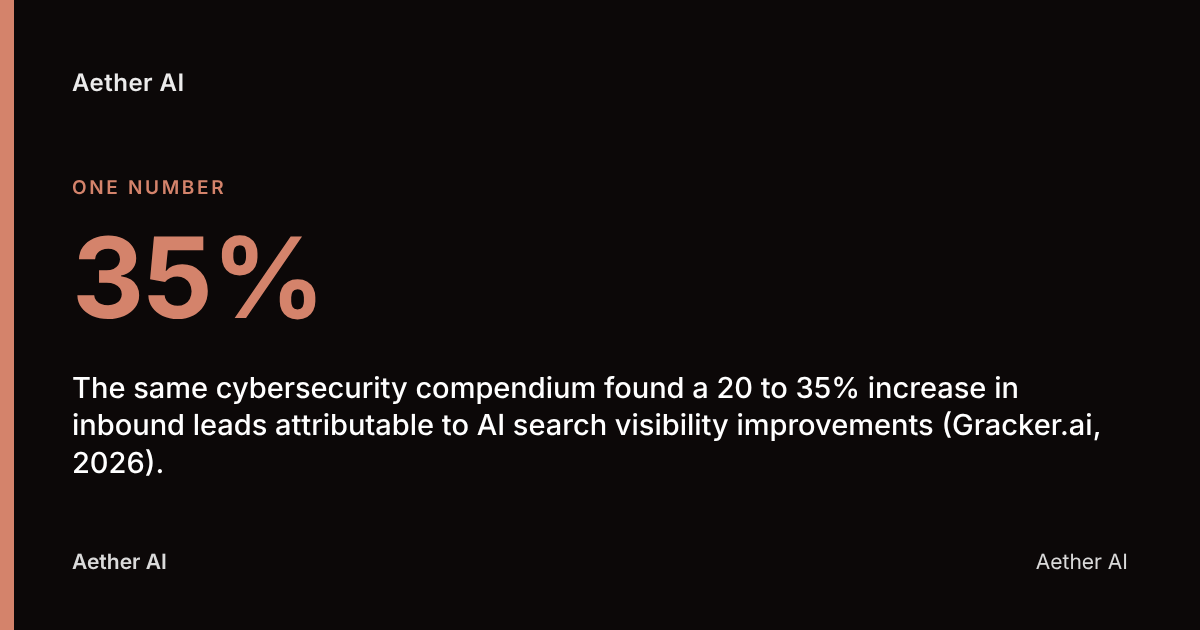
- The same cybersecurity compendium found a 20 to 35% increase in inbound leads attributable to AI search visibility improvements (Gracker.ai, 2026).
- Treat any GEO benchmark as directional: visibility and citation rates vary by AI engine and by query, so outcomes differ by sector.
What is GEO and how does it differ from traditional SEO?
GEO is the practice of optimising content so AI assistants and generative search engines name and cite your brand in their answers. It covers tools such as ChatGPT, Perplexity, Google AI Overviews, Claude, Gemini and Microsoft Copilot, each of which synthesises an answer rather than listing links.
Traditional SEO (search engine optimisation) optimises for ranking position on a results page: get to page one, and ideally position one, for a given search term. GEO has a different endpoint. There is no "position one" in a generated answer, only whether your brand is named at all, and whether it's cited as a source.
The two disciplines overlap in practice. Clear, well-structured content that answers a real question tends to perform in both. But the measurement differs completely: SEO tracks rank and click-through rate, GEO tracks mention rate and citation share across AI engines. A business running both needs to accept that GEO's feedback loop is newer, less standardised and still settling.
How GEO ROI is measured and which metrics to track
GEO ROI is measured by combining a citation time series with downstream traffic, conversion and revenue data, set against what you spend on GEO. No single metric proves ROI on its own; it's the chain of evidence that does.
- Establish a mention baseline. Ask the AI engines the real questions your buyers ask, on a fixed schedule, and record whether your brand is named and whether it's cited.
- Track AI-referred traffic. Use Google Search Console and server logs to isolate visits that arrive via AI assistants and generative search results.
- Measure conversion from that traffic. The cybersecurity case study compendium found AI-referred traffic converts at 3 to 5x the rate of traditional organic search (Gracker.ai, 2026).
- Attribute revenue and divide by spend. Match conversions to deal value where possible, then compare total return against the GEO budget for the period.
Our view: Aether AI believes the answer matters more than the rank. Ask the AI assistants your buyers' real questions on a schedule and record who gets named. The reasoning is practical: a mention rate tracked over time is the one input every other GEO metric in this section depends on. Get it wrong and everything built on top of it is undermined.
For background on building this into a wider reporting framework, see WebFX's explanation of the GEO ROI formula and Blankspace's four-layer GEO ROI framework.
GEO costs and timelines for a UK business
GEO campaigns usually cost far less than running an equivalent in-house content team. The exact price for a UK business depends on the size of its site, its market and how many AI engines it wants tracked; a quote confirms the detail. Typical GEO investment runs to a fraction of the cost of an equivalent traditional content team, a substantial cost reduction. Those figures come from the US cybersecurity sector, so treat them as a directional comparison rather than a UK benchmark.
On timing, the same compendium found measurable visibility gains within 90 days of implementing a GEO strategy. That's a reasonable expectation for the mention rate itself: a well-run programme should show movement in how often an AI engine names your brand within that window. Lead and revenue impact tend to lag behind visibility, because buyers who first encounter a brand in an AI answer still need time to research, compare and decide. A business expecting a 90-day payback on revenue, as opposed to on visibility, is likely to be disappointed. The honest timeline separates the two: visibility moves first, commercial outcomes follow.
GEO ROI versus SEO and paid search ROI
GEO, SEO and PPC (pay-per-click advertising) answer different questions, and comparing them on a single number misses the point. The useful comparison is what each channel is good at, and how long it takes to show it.
| Channel | What it optimises for | Typical payback signal | Where it struggles |
|---|---|---|---|
| GEO | Being named and cited in AI-generated answers | Visibility gains within around 90 days; AI-referred traffic converts at 3 to 5x the rate of organic search (Gracker.ai, 2026) | Measurement tools and standards are still maturing |
| SEO | Rank position on a traditional results page | Established click-through and conversion benchmarks | Rankings can be outranked by AI-generated answers that skip the results page entirely |
| PPC | Immediate placement for a paid term | Fast, but stops the moment spend stops | No lasting asset once the campaign ends |
GEO doesn't replace SEO or PPC: it sits alongside them. A brand that only ranks well in traditional search but is never named in an AI answer is losing visibility in a channel that's growing. The approach is to treat GEO as a complementary investment, reported on its own terms, separate from an SEO dashboard built for a different job.
What to check before investing budget in a GEO strategy
Before committing budget, audit your current AI-engine mention rate and compare it against competitors. This gives you a realistic starting point, and it turns the gap between you and the competitors who do get named into a concrete content plan.
Aether AI ran exactly this kind of audit across UK brands' target keywords, with 700 live AI engine scans in July and August 2026. The brands were named in 23 answers, or 3.3% of scans; the longest-established brand, in security services, was named in 6.3% of its 270 scans. That's a useful benchmark: if your own mention rate sits below 3.3%, you have more ground to make up than you might assume from traffic or ranking data alone.
"Start by seeing yourself the way the machines do. Run an audit of the questions that matter in your market and note who gets named instead of you. That gap list is your content strategy — everything else is decoration," said Lauren Dawkins, Head of Content, Aether AI
A limit worth stating plainly: AI visibility and citation rates are still volatile, and they vary by engine and by query. The cybersecurity benchmarks cited throughout this article, and the baseline above, show what's possible, not a guaranteed outcome for every sector or business.
FAQ
Who within a UK company should own GEO performance reporting?
GEO reporting sits most naturally with whoever already owns content or digital marketing, because the mention-rate tracking and the content response need to stay connected. In smaller firms, that's often a marketing manager; in larger ones, it usually reports up through the same team that owns SEO.
What tools can track brand citations in AI-generated answers?
Dedicated GEO platforms can run scheduled queries across engines such as ChatGPT, Perplexity, Google AI Overviews, Claude, Gemini and Copilot, logging whether and how a brand is named. Google Search Console also helps on the traffic side, though it withholds rare and low-volume queries to protect searchers' privacy, which limits what it shows on its own.
How can I attribute a specific sale or lead to GEO rather than another channel?
Exact attribution is hard, because a buyer who saw your brand named in an AI answer may still convert through a direct visit or a branded search days later. The practical approach is to ask new enquiries how they found you, tag any referral traffic from known AI assistant domains, and treat the resulting share as a reasonable estimate.
Are there UK legal or compliance issues with optimising content for AI search engines?
There's no GEO-specific UK law at present, but ordinary rules still apply. Claims in optimised content must stay accurate under the Consumer Protection from Unfair Trading Regulations, and any personal data used in tracking or attribution must follow UK GDPR. Treat GEO content with the same factual care you'd apply to any other marketing copy.
Getting a clear answer on your own GEO ROI
Most of the questions about GEO ROI above start with the same missing piece: a reliable mention-rate baseline for your own brand. Aether AI's free AI-visibility audit checks how often your brand is named and cited across six AI engines, alongside citation tracking, keyword and competitor tracking, and GSC integration. Get in touch with Aether AI to run the audit against your own market.